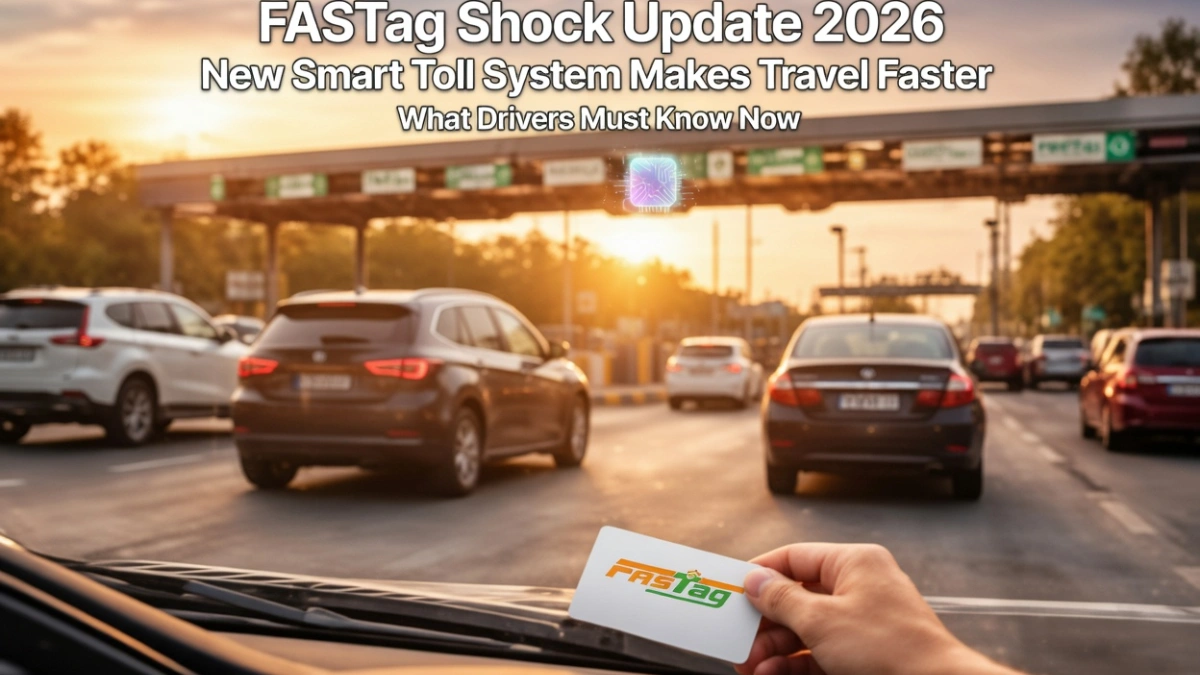
India’s toll payment system is undergoing a major transformation in 2026, and the latest FASTag updates are set to make highway travel smoother, faster, and completely cashless. With advancements in digital infrastructure and stricter enforcement, vehicle owners are now experiencing a smarter toll collection system designed for efficiency and convenience. Backed by the National Highways Authority of India, these updates are not just about technology upgrades but also about improving traffic flow and reducing waiting time at toll plazas across the country.
What Is FASTag and Why It Matters in 2026
FASTag is an electronic toll collection system that uses Radio Frequency Identification technology to automatically deduct toll charges from a linked account. Installed on the windshield of vehicles, it allows drivers to pass through toll plazas without stopping for cash payments. In 2026, FASTag has become more than just a convenience. It is now a critical part of India’s digital payment ecosystem, ensuring seamless movement on highways while reducing fuel consumption and travel time.
Key FASTag Updates Introduced in 2026
The latest updates focus on speed, automation, and user convenience. Authorities have upgraded toll systems to ensure quicker detection and instant deduction of toll charges. New integration with GPS-based tracking is also being explored, which could eventually replace traditional toll booths with distance-based tolling. This means users may only pay for the distance they actually travel.
Stricter compliance rules have also been introduced. Vehicles without active FASTag may face penalties or double toll charges, encouraging universal adoption.
How FASTag Is Making Travel Faster
One of the biggest advantages of FASTag is reduced waiting time at toll plazas. With automatic scanning and deduction, vehicles can pass through lanes without stopping. This not only saves time but also reduces congestion, especially during peak travel hours and holiday seasons. Long queues that were once common at toll plazas are now significantly reduced. Additionally, faster movement leads to lower fuel consumption, which benefits both drivers and the environment.
Smart Features Added in 2026
FASTag systems have become smarter with new features that enhance user experience. Real-time notifications, transaction alerts, and easy recharge options are now standard. Users can track toll expenses through mobile apps, receive instant SMS alerts for every transaction, and manage their accounts digitally. Integration with banking apps and digital wallets has made recharging FASTag quick and hassle-free.
Comparison of Old vs New FASTag System
| Feature | Old System | 2026 Updated System |
|---|---|---|
| Toll Payment | Manual + FASTag | Fully automated |
| Waiting Time | Moderate to High | Minimal |
| Technology | RFID only | RFID + Smart Integration |
| Alerts | Limited | Real-time notifications |
| Compliance | Flexible | Strict enforcement |
This comparison clearly shows how FASTag has evolved into a more efficient and user-friendly system.
Benefits for Daily Commuters and Travelers
The updated FASTag system offers multiple benefits for both regular commuters and long-distance travelers.
- Faster travel with minimal waiting time
- Completely cashless and hassle-free payments
- Reduced fuel consumption and travel costs
- Better transparency with real-time tracking
- Easy recharge and account management
What Happens If You Don’t Use FASTag
Authorities have made FASTag mandatory for most vehicles. If a vehicle does not have a valid FASTag or has insufficient balance, drivers may have to pay double the toll fee.
This strict rule is aimed at ensuring smooth traffic flow and encouraging digital payments across all highways.
Future of Toll Collection in India
The future of toll collection is expected to become even more advanced. GPS-based tolling systems may soon eliminate the need for physical toll plazas altogether. This would allow for seamless, barrier-free travel where toll charges are calculated based on the distance traveled. Such innovations could further enhance efficiency and reduce infrastructure costs.
Conclusion
The FASTag 2026 updates mark a significant step toward smarter and more efficient highway travel in India. With faster processing, improved technology, and strict enforcement, the system is designed to benefit both drivers and the overall transportation network.
As digital adoption continues to grow, FASTag is set to become an even more integral part of everyday travel. For vehicle owners, staying updated and maintaining an active FASTag is essential to enjoy a smooth and hassle-free journey.
Disclaimer: This article is for informational purposes only. Features and rules may vary based on official government updates.