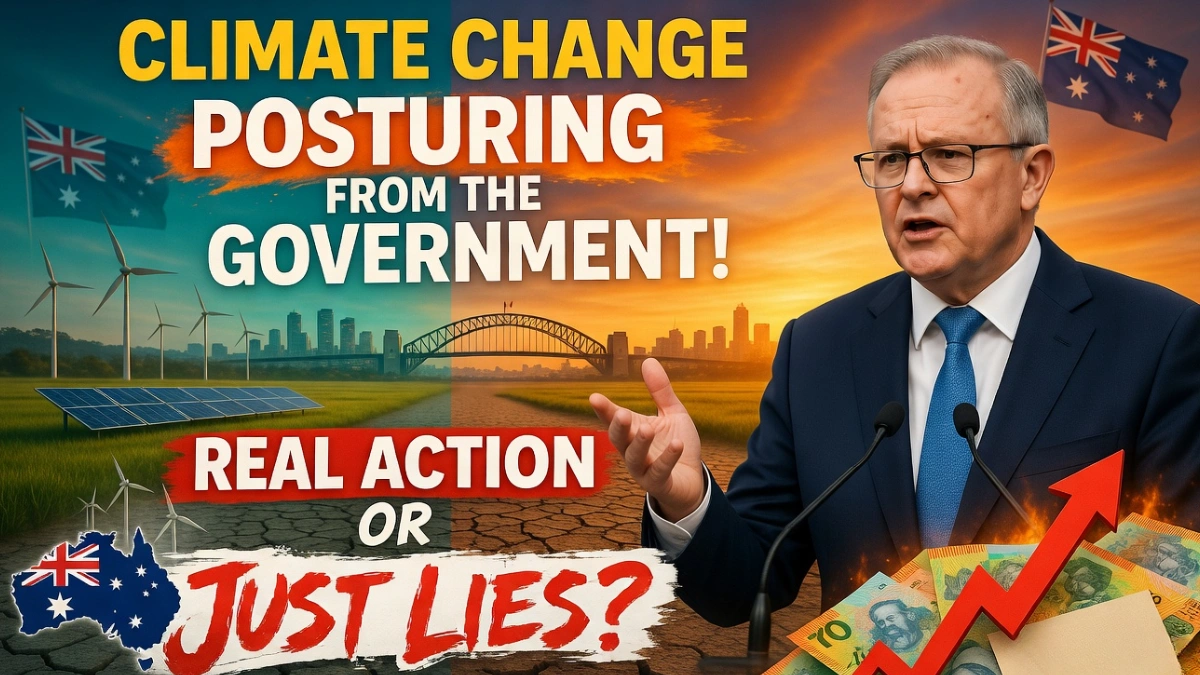
In 2026, climate change has become one of the most debated global issues as governments face mounting pressure to demonstrate real progress. Public awareness has increased significantly, and citizens now expect measurable results rather than broad promises. This shift has created a situation where every policy announcement is closely scrutinized for authenticity and effectiveness.
At the same time, extreme weather events and environmental challenges have made climate policy more urgent than ever. Governments are required to balance long term environmental goals with short term economic and political considerations. This balance often leads to criticism that some actions may prioritize communication over concrete outcomes.
What Governments Are Actually Doing on Climate Policy
Most governments are actively investing in renewable energy, emissions reduction programs, and sustainability initiatives. These include solar and wind expansion, electric vehicle incentives, and stricter environmental regulations. These measures indicate that climate action is not purely symbolic but part of ongoing structural changes.
However, implementation varies across regions and timelines. While policies may be announced quickly, execution can take years due to infrastructure requirements, funding constraints, and regulatory approvals. This gap between announcement and implementation often fuels public skepticism about whether progress is happening fast enough.
Where Concerns About Posturing Come From
Critics argue that some climate announcements are designed to create public confidence rather than immediate impact. When targets are set without clear enforcement or measurable milestones, it becomes difficult to verify progress. This leads to the perception that certain policies are more about political positioning than actual environmental change.
Another concern is inconsistency between policy commitments and real-world outcomes. Delays in projects, partial implementation, and shifting priorities can make it appear as though action is less substantial than presented. These factors contribute to ongoing debates about transparency and accountability in climate governance.
Balancing Economic Growth With Environmental Responsibility
One of the most complex challenges in climate policy is balancing economic stability with environmental goals. Rapid transitions to low carbon systems can affect industries, employment, and energy prices. Governments often adopt gradual approaches to avoid economic disruption while still pursuing emissions reductions.
This cautious approach can sometimes be interpreted as slow progress, but it reflects the need to maintain stability in interconnected economies. Policymakers must weigh short term economic impacts against long term environmental benefits, which often leads to compromises in the pace and scale of implementation.
Key Comparison of Climate Action vs Perceived Posturing
| Aspect | Climate Action Perspective | Posturing Concerns |
|---|---|---|
| Policy Intent | Long term emissions reduction | Short term political visibility |
| Implementation | Infrastructure and investment driven | Delays and partial execution |
| Accountability | Measurable targets and reporting | Limited enforcement mechanisms |
| Communication | Data and progress updates | Emphasis on announcements |
| Public Impact | Gradual environmental improvement | Perception of limited real change |
This table highlights the differences between intended policy outcomes and how they are often perceived by the public, helping clarify the ongoing debate.
What the Public Should Focus on Moving Forward
Rather than relying solely on announcements, the public should look at measurable indicators such as emissions data, project completion rates, and independent evaluations. These metrics provide a clearer picture of whether climate policies are achieving their intended goals.
Understanding the distinction between policy commitments and real-world outcomes is essential for forming an informed perspective. As climate strategies continue to evolve in 2026, transparency, accountability, and consistent reporting will play a critical role in determining whether actions align with expectations.
Disclaimer: This article is for informational and analytical purposes only and reflects general perspectives as of 2026. It does not represent political opinion or policy endorsement. Readers should consult multiple credible sources for a balanced understanding of climate policies and developments.