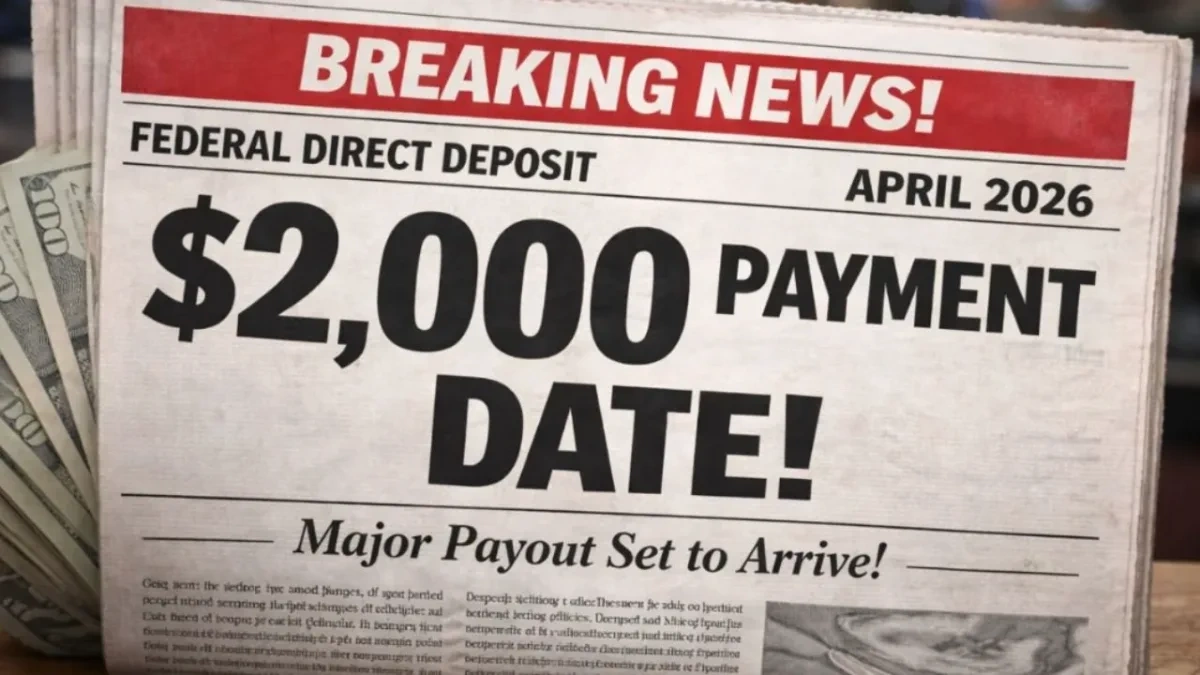
The buzz around a $2,000 federal direct deposit in 2026 has taken over headlines and social media, leaving millions of Americans confused and hopeful. Many are wondering if this is a new stimulus check, a Social Security bonus, or just another rumor. The reality is more complex, and understanding the facts can help you avoid misinformation and make smarter financial decisions.
What Is the $2,000 Federal Direct Deposit in 2026
The idea of a $2,000 direct deposit payment is not tied to a single official nationwide program announced for all Americans. Instead, it is often linked to ongoing discussions around Social Security benefits, stimulus-style support, or adjustments in federal payouts. In most cases, this figure comes from estimated or proposed increases in benefits, not a guaranteed one-time payment. Some beneficiaries may receive around this amount monthly depending on their earnings history and benefit calculations, but it is not a universal payout.
Is This a New Stimulus Check or Something Else
Many people assume this is a new stimulus check similar to pandemic-era payments. However, as of now, there has been no official confirmation of a $2,000 stimulus being issued to all citizens in 2026.
What’s actually happening is a mix of policy discussions, cost-of-living adjustments, and benefit projections. These factors can create misleading headlines that make it seem like a fixed payment has been approved.
Expected Payment Dates in 2026
There is no single nationwide payment date for a $2,000 deposit because it is not a confirmed one-time program. However, regular federal payments like Social Security follow a structured schedule.
Typically, Social Security payments are distributed based on birth dates: Payments are sent on the second, third, or fourth Wednesday of each month depending on when you were born. Supplemental Security Income is usually paid at the beginning of each month. If any new federal payment were to be approved, it would likely follow a similar structured timeline and be officially announced in advance.
Who Could Be Eligible for Higher Payments
While a universal $2,000 payment is not confirmed, certain individuals may receive amounts close to this level through existing programs. Eligibility depends on several factors such as work history, lifetime earnings, and the age at which benefits are claimed. Those who delay retirement or have higher lifetime earnings often receive larger monthly payments. Cost-of-living adjustments also play a role, increasing benefit amounts annually to match inflation trends.
Why This Topic Is Trending Right Now
The topic has gained traction due to rising living costs and ongoing economic uncertainty. Many Americans are actively searching for financial relief, making them more likely to engage with headlines about large payments. At the same time, policy debates around Social Security reform and benefit increases are fueling speculation. This combination of real discussions and exaggerated claims is what’s driving the viral attention.
Key Facts Americans Should Remember
The most important thing to understand is that not every trending financial headline reflects a confirmed policy. Staying informed with verified updates is essential. Many payment claims circulating online are based on projections or proposals rather than approved programs.
Government benefits vary widely depending on individual circumstances, and there is no one-size-fits-all payment amount. Planning your finances based on confirmed information rather than viral claims is critical for long-term stability.
Comparison Between Rumor and Reality
| Aspect | Rumor | Reality |
|---|---|---|
| Payment Amount | $2,000 for everyone | Varies by individual benefits |
| Type | New stimulus check | Mostly existing benefit structures |
| Payment Date | Fixed national date | Regular monthly schedules |
| Eligibility | All citizens | Based on program rules |
| Status | Confirmed payout | No official universal approval |
What You Should Do Next
Instead of relying on viral claims, focus on understanding your actual eligibility for federal programs. Check your Social Security statements, track official announcements, and stay updated on verified government releases. If you are planning for retirement or depending on federal benefits, consider building additional income sources and savings to stay financially secure.
Conclusion
The idea of a $2,000 federal direct deposit in 2026 is more myth than reality for most Americans. While some individuals may receive similar amounts through existing benefits, there is no confirmed universal payment for everyone. Staying informed and focusing on real financial planning is the best way to navigate these changes.
Disclaimer: This article is for informational purposes only and does not confirm any official $2,000 payment. Always verify updates through official government sources.